ChristophSuppan
IT support, homelab and photography
I keep systems running. My own included.

About me
I am Chris. Outside of work I mostly spend my time with Linux, networking, virtualisation and everything you probably do not really need at home.
A lot of the homelab exists because I wanted to try something and then decided it could stay.
Most of the time I am out with my wife Nicole and Balu, and the camera is almost always with me. Nicole takes photos too, and often better ones than I do.
Timeline
Hover over or click an entry to see details and its time span.
Electrical engineering
2013 to 2018
Building installation, building automation, maintenance and troubleshooting.
Office support
2018 to 2022PIDAS
Phone support for office workplaces: software, accounts, printers and everything that gets stuck in day-to-day office work.
Production support
2022 to 2024ATOS
On site in production: analysing and fixing critical IT incidents, deploying production PCs and network components.
1st and 2nd level support
since 2024ATOS
Solving incidents and complex requests, coordinating escalations, onboarding new colleagues.
Homelab
since 2020/21private
Started with a Synology DS220+, today three Proxmox nodes with their own network, backup and monitoring.
Homelab
The beginning
Synology DS220+, since 2020/21
I only wanted a NAS. That clearly did not last.
The DS220+ first stored photos and files, then hosted my first Docker containers. Today it stores data and an additional copy of the cluster backups.
Network
Separate areas instead of one flat network
Everyday devices, guests and system administration use separate network areas. OPNsense handles routing and firewall rules; connections between the areas are configured deliberately.
A local DNS resolver with filtering handles name resolution. This gives me one place to investigate network questions instead of hunting through settings on every device.
Reverse proxy and sign-in
Traefik and Authentik
Web services use Traefik as a central entry point, with TLS certificates renewed automatically. Authentik handles sign-in for services configured to use it.
These are different jobs: the proxy finds the right service, while sign-in controls access. This does not mean every service automatically shares the same login.
Proxmox
Three machines for virtual machines and containers
Three Proxmox machines, including an efficient mini PC. Virtual machines and Linux containers are separated by task and can be maintained independently.
A shared cluster simplifies administration. It does not by itself guarantee that every service automatically continues on another machine after a hardware failure.
What runs on it
Home automation, web services and monitoring
Some parts of the homelab are used every day, including home automation. Personal web services run alongside the tools I use to keep an eye on operations.
Trying something out also means working out how to update it, back it up and recover it later.
Backups
Local backups, encrypted copies off site
Proxmox Backup Server backs up the virtual machines and containers. There is also a copy on the NAS and an encrypted export off site. Configurations are backed up as well.
The NAS copy is a file mirror, not a second backup server ready to use. For a PBS restore, it first needs to be copied back and verified.
One documented restore exercise used a test copy disconnected from the network. This let me check local function without disturbing the running system. The tour explains the recovery stages.
Operations
Monitoring, power and documentation
Netdata shows system health and reports problems. Uptime Kuma adds availability checks from inside and outside. They answer different questions: a running machine does not necessarily mean its service can be reached externally.
A UPS connected through NUT enables an orderly shutdown during a power outage. A custom all-clear groups the return of monitored services after larger outages.
I document changes and recovery procedures in Markdown. It saves me wondering three months later what I actually did.
Off site
This website runs on a virtual private server (VPS)
This website is served from a rented IONOS server, separately from my homelab at home. Cloudflare sits in front, Traefik routes the request and nginx serves the finished files.
The external servers also have encrypted backups. The tour follows a website request and explains why opening the page is different from submitting a message.
Photography
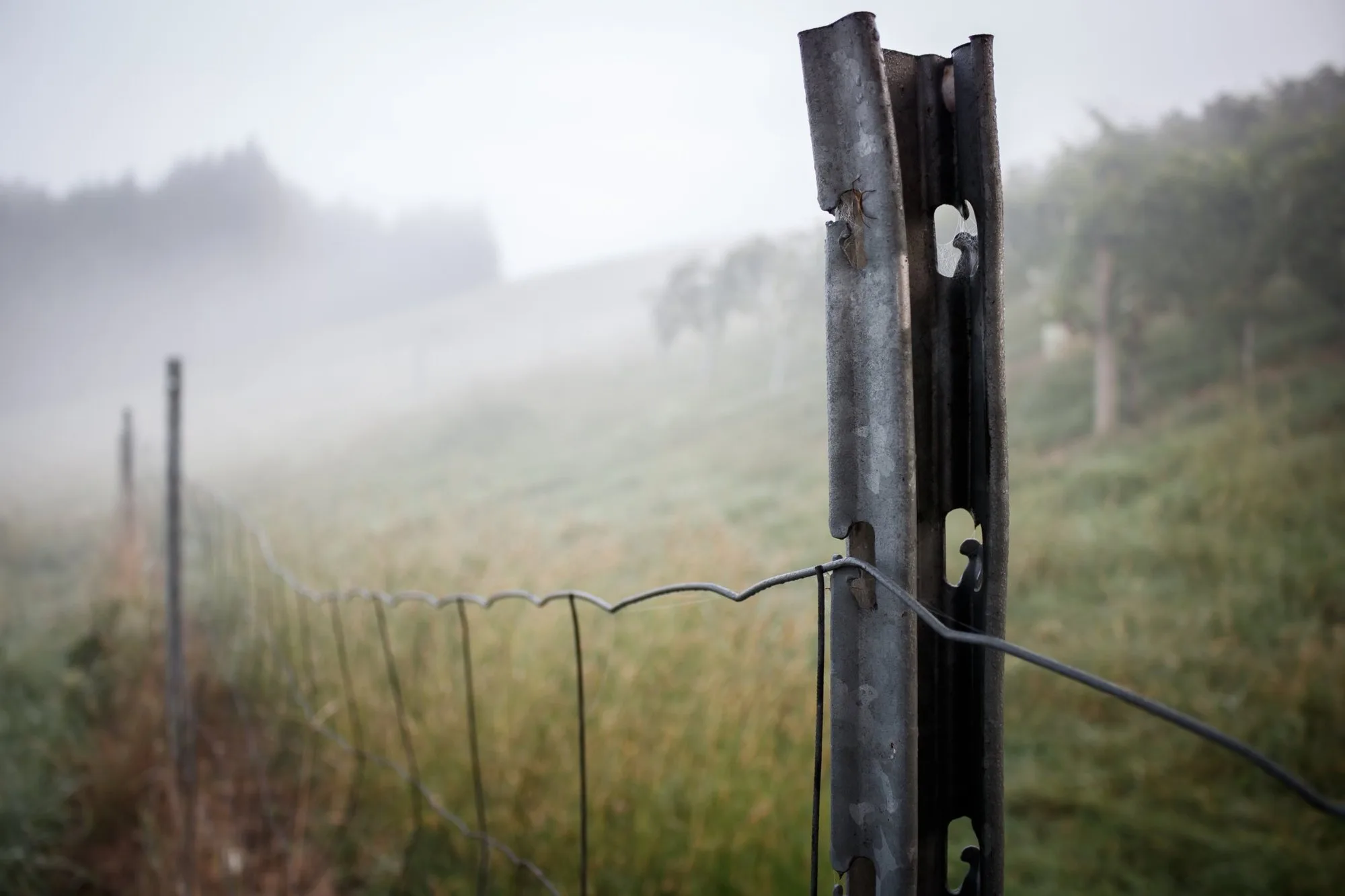
When I am not sitting in front of a screen, the camera usually comes along. Lots of landscapes, often in fog, travel and whatever crosses my path.



















For Flummi
You were my anchor through the rough times.
You held me up when I couldn’t do it myself.
Without you, none of this would work: the servers, the homelab, or me.
Thank you. For everything.
Tips
What I keep explaining, in short. For everyone who does not deal with tech every day.
Passwords
A separate one for every account
Please do not use the same password everywhere. If it is stolen from one provider, attackers often automatically try it on other services as well.
I recommend a separate password with at least 16 characters for every account. Of course nobody can remember all of them. That is exactly what password managers are for: they create strong passwords and store them for you.
If you want to try it out, you can also use my password generator.
Two-factor authentication
Especially for your email account
If a service offers two-factor authentication (2FA), I would definitely turn it on. Especially for your email account, because it can often be used to reset the passwords of your other accounts.
Ideally use an authenticator app or, where supported, a passkey. SMS codes are still better than no extra protection at all.
Important: do not approve sign-in requests you did not start yourself. Not even if the request keeps popping up several times in a row.
Calls from so-called support
Microsoft, your bank and others
If someone suddenly calls and claims to be from Microsoft, your bank or another well-known company, I would always be careful.
Especially with fake Microsoft support, scammers keep claiming that your computer is infected and that they urgently need to connect to it.
Do not let anyone access your computer just like that, and do not pass on passwords or confirmation codes.
If you are unsure, hang up and call the company yourself on its official number. Look that number up yourself, for example on your bank card or the official website, not from the call or a text message.
Warning messages in the browser
“Your computer is infected”
You may have seen a web page suddenly claiming your computer is infected. Often everything flashes, an alarm sound plays, or you are told to call a phone number right away.
Messages like that usually come from fraudulent websites and do not mean that anything is actually wrong with your computer.
Do not call the number shown and do not install anything offered there.
Just close the tab or the browser. If the window will not close, on Windows you can open the Task Manager with Ctrl + Shift + Esc and end the browser there.
Links in emails and text messages
Bank, invoice, parcel
A message from your bank, a supposedly unpaid invoice or a parcel that could not be delivered. These messages can look pretty genuine these days.
So my tip: if you get an unexpected message asking you to sign in or pay, open the app or website yourself instead.
Do not rely on the sender name alone. It can be faked too.
And if something seems off, it is better to ask one time too many.
Updates
Do not put them off forever
I know, updates usually show up exactly when you have no time for them. Still, you should not put them off forever.
Security updates in particular close known vulnerabilities, some of which are being actively exploited.
Ideally turn on automatic updates for Windows, your smartphone and your browser. If a restart is needed, do it fairly soon.
For older devices, I would also check whether they still get security updates at all. If not, it is better not to use them for sensitive things like online banking.
Backing up photos and important files
External drive or cloud
Photos, documents and other personal files are often worth a lot more than the computer they are stored on.
That is why I would always back up important data. For example on an external drive that you unplug again after the backup, or with a suitable cloud backup service.
The minimum: regularly copy your important folders to an external drive. Copying means the files also stay on your computer. If you move them there, you still only have them once, just somewhere else, and that is not a backup.
Automatic syncing does not necessarily replace a proper backup either. What gets deleted on your computer often disappears there too.
Check every now and then that your backup works and that files can actually be restored.
Do not let anyone rush you
When it suddenly gets urgent
If someone claims you have to act right now, because otherwise your account will be locked, money will be lost or something bad will happen, be especially careful.
Many scammers work with exactly this kind of time pressure. They want to stop you from thinking it through calmly or asking someone for advice.
Take the time to check the situation. For important matters you can always reach the company yourself through a known, official contact.
Contact
Write to me.
Questions about tech, the homelab, a photo, or just to say hello: the message comes straight to me.